 Jutye Sanitary
Jutye Sanitary
Jutye Sanitary
China has become a major sourcing destination for bathroom hardware, including the Pop Up Sink Drain. Its manufacturers serve residential, commercial, and hospitality projects worldwide. However, product quality can vary sharply between factories.
This guide examines ten notable Chinese manufacturers through practical purchasing criteria. These include brass or stainless steel construction, surface finishing, sealing performance, drainage speed, and cartridge durability. Factory experience also matters. A supplier producing thousands of drains monthly may offer more consistent dimensions and replacement parts.
Small details reveal manufacturing discipline. Check threaded alignment, overflow compatibility, gasket thickness, and the smoothness of the push mechanism. Ask for material reports, inspection records, production photos, and clear warranty terms. Samples should be tested under repeated opening and closing cycles, not merely photographed.
Certificates help, but they do not replace verification.
The review also considers OEM capability, minimum order quantities, packaging protection, lead times, and export communication. These factors often decide whether a promising product performs well after installation. A polished website is useful, but it proves little by itself.
Some manufacturers may appear equally capable at first glance. They are not always equal in after-sales support or batch consistency. This is where buyers must remain careful. A lower price can reflect efficient production, or hidden compromises.
The following selection is intended as a practical starting point, not an absolute ranking. Supplier information, certifications, and product specifications should be confirmed directly before purchasing. Even experienced buyers can miss small technical differences.
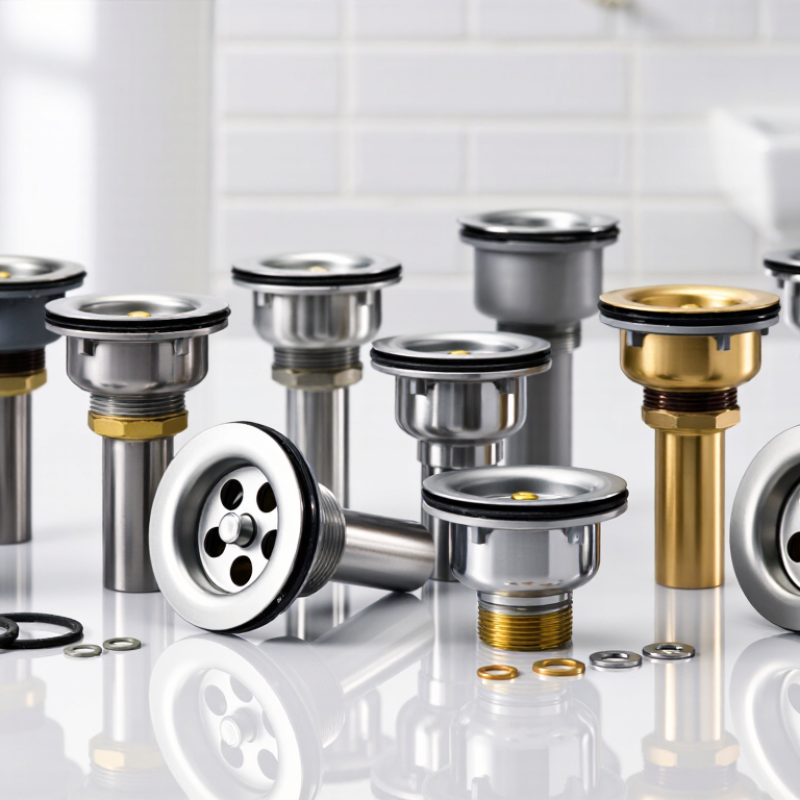
A pop-up sink drain is a waste fitting with a movable stopper. Pressing the stopper closes the basin. Pressing it again opens the passage. A lift rod behind the faucet controls this motion through a pivot rod and spring clip. The linkage looks simple, but small alignment errors can cause leaks or a stopper that will not seal.
Most bathroom pop-up drains use a 1¼-inch outlet, while some utility and larger basin designs use 1½-inch connections. The correct size must match the trap and basin opening. ASME A112.18.2/CSA B125.2 covers plumbing waste fittings, including requirements for durability, sealing, and operation. These details matter when comparing Chinese manufacturers. Ask for material certificates, dimensional drawings, cycle-test results, and inspection records. A polished surface proves little.
The U.S. EPA WaterSense 2023 annual report says labeled plumbing products have saved more than 7.5 trillion gallons of water since the program began. A drain does not create that saving. The faucet does. Still, a reliable stopper prevents slow leaks and repeated adjustments. WaterSense also limits bathroom faucet flow to 1.5 gallons per minute, compared with older 2.2-gallon models. That distinction is often missed.
Stainless steel, brass, and engineered polymer each have practical uses. Brass feels solid, but coating quality remains critical. Polymer resists some corrosion, though threads may wear faster. In real installations, hair and soap collect below the stopper. Easy removal helps. I once treated “tool-free cleaning” as a complete solution. That was too optimistic. Clearance, seal compression, and replacement parts matter just as much.
A pop-up sink drain is a basin waste fitting operated by a lift rod, pull rod, or push-button mechanism. Pressing or lifting the actuator moves a stopper to open or close the drain, while the overflow version allows excess water to escape through the basin overflow opening.
| Configuration | Operating Principle | Typical Drain Size | Overflow | Common Body Material | Typical Finish | Connection Standard | Typical Application | Key Selection Consideration |
|---|---|---|---|---|---|---|---|---|
| 01 | Lift rod raises or lowers the stopper through a pivot rod. | G 1¼ or 1½ in. nominal basin waste | With overflow | Brass or stainless steel | Chrome, brushed nickel, or matte black | BSP or NPSM, depending on market | Traditional bathroom basins | Confirm lift-rod clearance behind the faucet. |
| 02 | Push-button stopper opens and closes by pressing the cap. | G 1¼ or 1½ in. nominal basin waste | With overflow | Brass, stainless steel, or engineered polymer | Chrome, brushed, polished, or colored PVD | BSP or NPSM | Modern countertop and wall-hung basins | Choose a serviceable spring cartridge. |
| 03 | Push-button stopper seals against a replaceable rubber gasket. | G 1¼ in. basin waste | Without overflow | Brass or stainless steel | Polished chrome or brushed stainless | BSP or NPSM | Vessel basins without overflow holes | Do not use in a basin that has an overflow opening. |
| 04 | Removable click-clack cartridge moves vertically inside the body. | G 1¼ in. nominal basin waste | With overflow | Stainless steel or brass | Brushed, polished, or PVD-coated | BSP or NPSM | High-use residential bathrooms | Check replacement-cartridge availability. |
| 05 | Wide decorative cap covers the sealing plug and drain flange. | G 1¼ in. basin waste | With overflow | Brass or stainless steel | Chrome, brushed nickel, gold, or black | BSP or NPSM | Designer and countertop basins | Verify cap diameter against the basin opening. |
| 06 | Low-profile stopper uses a compact spring-loaded mechanism. | G 1¼ in. basin waste | With overflow | Stainless steel or brass | Brushed stainless or matte finish | BSP or NPSM | Shallow ceramic or stone basins | Measure available clearance below the basin. |
| 07 | Drain basket and stopper are removable for cleaning. | G 1¼ or 1½ in. nominal basin waste | With overflow | Stainless steel or brass | Polished chrome or brushed nickel | BSP or NPSM | Rental properties and public washrooms | Prioritize easy access to hair and debris. |
| 08 | Extended-thread body accommodates thicker countertop basins. | G 1¼ in. basin waste | With or without overflow | Brass or stainless steel | Chrome, brushed, or PVD-coated | BSP or NPSM | Thick stone, glass, and ceramic countertops | Match threaded length to basin and counter thickness. |
| 09 | Large-cap push mechanism provides a broad surface for operation. | G 1¼ in. basin waste | Without overflow | Stainless steel or brass | Matte black, brushed gold, or polished chrome | BSP or NPSM | Minimalist basins without overflow holes | Use only with a non-overflow basin. |
| 10 | Universal pop-up assembly uses interchangeable seals and adapters. | G 1¼ or 1½ in. nominal basin waste | Selectable: with or without overflow | Brass, stainless steel, or engineered polymer | Chrome, brushed nickel, white, or black | BSP or NPSM adapters | Replacement and multi-market projects | Confirm the included adapters and gasket sizes. |
It is a waste fitting with a movable stopper. Press it once to close the basin. Press it again to open the drain.
A lift rod behind the faucet connects to a pivot rod. A spring clip holds the linkage together. Small alignment errors can cause leaks.
Many bathroom basins use a 1¼-inch outlet. Larger or utility basins may require 1½ inches. Match the basin opening and trap carefully.
Stainless steel, brass, and engineered polymer are common choices. Brass feels solid. Polymer can resist corrosion, but its threads may wear sooner.
Request material certificates, dimensional drawings, leakage tests, and cycle-test results. Ask about plating thickness and inspection procedures. Polished surfaces prove little.
Send every supplier the same detailed specification. Include size, overflow needs, thread standards, packaging, quantity, and delivery expectations. Their questions reveal experience.
Yes. Install samples in a real basin. Check stopper height, gasket compression, water flow, surface marks, and thread compatibility.
Hair and soap may collect below the stopper. Poor clearance can prevent proper sealing. I once trusted “tool-free cleaning” too much. That judgment was incomplete.
No. The faucet controls water flow. A dependable stopper mainly prevents slow leaks and repeated adjustments. The distinction is easy to miss.
Not always. A low price may exclude testing, stronger materials, or protective packaging. Confirm minimum orders, sample costs, payment terms, and inspection plans. Mistakes can delay a shipment.
This guide explores the essential features and working principles of a Pop Up Sink Drain, explaining how its lift mechanism controls water flow and helps maintain a clean, practical basin. It also introduces a structured way to evaluate China’s top 10 manufacturers by examining production experience, engineering capability, material selection, quality control, certifications, delivery reliability, and customer support.
The article compares common materials, surface finishes, drainage performance, durability, and customization options to help buyers understand the differences between available products. It also offers practical advice for selecting the right Chinese manufacturer based on project requirements, order volume, budget, design preferences, packaging needs, and long-term cooperation goals. By using these criteria, importers, distributors, contractors, and product developers can make a more informed decision and choose a dependable Pop Up Sink Drain supplier for residential or commercial applications.
