
Jutye Sanitary
Choosing a reliable Floor Drain manufacturer is not simply a matter of comparing unit prices. Global buyers must examine performance, materials, certifications, factory consistency, and after-sales support.
A floor drain may look simple. It is not. Its grate must resist daily impact, its body must manage water efficiently, and its trap must help control odors. In commercial kitchens, hospitals, hotels, and industrial rooms, small drainage failures can create expensive interruptions. Water pooling near a doorway is an obvious warning. Corrosion around the outlet is another.
Dr. Joseph Lstiburek, a respected building-science expert, often reminds professionals, “If you can’t see it, you can’t fix it.” This principle matters when evaluating drainage products. Buyers should inspect internal structure, cleaning access, sealing details, and installation guidance before approving a supplier. Product photographs are not enough.
Leading manufacturers usually provide dimensional drawings, test information, material options, and traceable production records. Stainless steel may suit demanding environments, while cast iron can offer strength in heavy-duty applications. Yet no material is perfect. Even a well-made Floor Drain can fail when the slope, trap depth, or maintenance plan is poorly considered.
This guide compares manufacturers from a buyer’s practical viewpoint. It considers product range, engineering capability, export experience, customization, quality controls, and communication. Some rankings may remain debatable, because project conditions differ widely. That is worth admitting.
A dependable supplier should answer technical questions clearly, not hide behind polished catalogs. The best choice is the manufacturer whose product performs consistently after installation, not merely the one that looks impressive before purchase.
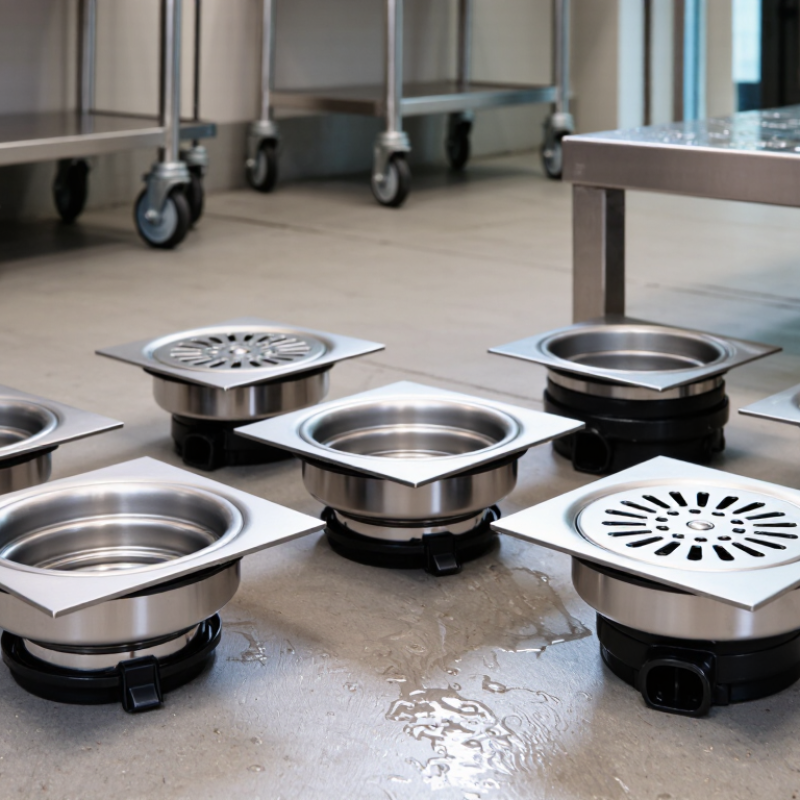
Global floor drain demand is gaining momentum in 2024, supported by housing construction, hotel renovation, healthcare projects, and industrial facilities. Buyers are also replacing weak drainage systems in older buildings. A practical market estimate places annual growth near 6% to 8% through 2030, although published figures differ by region and research method.
The 2030 outlook depends on more than construction volume. Water-saving plumbing designs require reliable flow, deep water seals, and easier maintenance. Stainless steel drains remain popular in commercial kitchens, bathrooms, and wet rooms. Anti-odor membranes are also attracting attention where traditional traps dry out. Small details matter.
From my experience reviewing drainage specifications, buyers should compare outlet size, load rating, surface finish, installation depth, and cleaning access. A low unit price can create higher labor costs later. Manufacturers with documented testing, consistent dimensions, and responsive technical support are usually safer choices for international projects. Yet the market forecast is not perfect. Freight costs, building cycles, and regional standards may reduce the expected CAGR. Buyers should request current production data, test reports, sample inspections, and warranty terms before approving large orders. Demand may grow steadily, but not evenly.
For global buyers, floor drain selection should begin with evidence, not catalog photos. EN 1253 addresses drainage performance, water seals, odor control, and practical installation requirements. It also helps buyers compare outlet designs across European projects. ASME A112.6.3 covers floor and trench drains used in plumbing systems. It focuses on construction, dimensions, loading, and functional performance. These standards are not interchangeable. A drain meeting one standard may still require separate project approval.
ISO 9001 adds a different layer. It evaluates the manufacturer’s quality management system, not automatic product compliance. The ISO Survey of Certifications 2022 reported more than 1.2 million ISO 9001 certificates worldwide. That figure shows broad adoption, but it does not prove every factory controls critical drain details. Buyers should request current certificates, test reports, material declarations, and traceability records.
A site audit can reveal more than polished documents. I have seen small inconsistencies in grate fit and packaging labels create expensive installation delays. Standards reduce risk, but they do not remove inspection work.
Tips:
Confirm the exact edition of EN 1253 or ASME A112.6.3. Check flow-rate results, load classification, seal depth, and outlet compatibility. Ask whether testing covers the finished drain assembly. Review sampling methods and laboratory accreditation. A useful specification should name measurable requirements, not simply say “international standard.” This is where many purchasing documents remain too vague.
A serious technical screen begins with the outlet, not the finish. For global projects, compare 50, 75, and 100 mm outlets against the specified discharge. A target range of 0.5–2.0 L/s should be verified through tested flow curves, not marketing labels. EN 1253-1:2015 requires drainage products to declare performance characteristics, including discharge capacity and load classification. Ask for test conditions, water depth, grate type, and trap configuration.
Load ratings also need practical interpretation. EN 1253-1 identifies classes including H1.5, K3, L15, M50, and R50, expressed through applied loads from 1.5 to 50 kN or higher classifications. A K3 rating may suit pedestrian areas, while service corridors need a stronger, documented class. CIBSE Guide G, Public Health Engineering, stresses demand-based drainage design rather than relying on pipe diameter alone. That distinction matters when several outlets discharge simultaneously.
I have seen 100 mm outlets underperform because the trap restricted flow. A neat datasheet can still mislead. Require independent test reports, dimensional drawings, corrosion data, and batch traceability. Check whether the stated 2.0 L/s applies with the grate installed. It often does not. Also inspect sealing depth, cleanout access, and installation tolerances. These details expose weak suppliers faster than polished product photography.
Top Floor Drain Manufacturers for Global Buyers
Global buyers should compare floor drain manufacturers using evidence, not polished catalogs. Grand View Research’s 2024 plumbing fixtures analysis highlights renovation, water management, and commercial construction as key demand drivers. Capacity therefore matters. Ask for verified monthly output, production shifts, and recent export volumes. A factory may claim high capacity, yet outsource polishing or packaging.
MOQ affects purchasing risk. A 300-piece MOQ may suit a trial order, while larger projects need stable replenishment. Lead times should separate sampling, production, inspection, and shipping. The World Bank’s Logistics Performance Index 2023 confirms that customs and logistics reliability strongly influence delivery results. Request a written schedule, not a promise in a chat message. Delays happen.
Warranty terms reveal engineering confidence. Check whether coverage includes leakage, surface corrosion, grate deformation, and replacement labor. A three-to-five-year warranty is useful only when claims procedures are clear. Customization should cover drain size, outlet position, grate pattern, anti-odor seal, and packaging language. Ask for drawings, material certificates, and test records before tooling. ISO 9001 certification supports process control, but it does not guarantee every batch. I would still approve a physical sample. One overlooked gasket can weaken an otherwise excellent specification. Suppliers should also explain tooling fees, revision limits, and spare-part availability. The cheapest quotation may become expensive after installation.
Top Floor Drain Manufacturers for Global Buyers?
A global buyer should score more than the factory quote. Compare unit price, tooling, packaging, freight, duties, and replacement stock. A drain priced at $4 may cost twice that after delivery. Ask for three comparable quotations, including 304 stainless steel grade, outlet size, finish, and carton details. The World Bank’s Logistics Performance Index 2023 covers 139 economies, showing why destination-based delivery performance matters. Request shipment records, transit estimates, and a written delay procedure.
Certifications need technical checking. EN 1253 applies to many building drainage products in European projects, while ASME A112.6.3 is relevant to certain commercial floor and trench drains. Neither certificate should be accepted from a screenshot alone. Verify the certificate number, testing scope, production site, and validity date. ISO 9001 can indicate controlled processes, but it does not prove drain performance. Ask for salt-spray results, load testing, water-flow data, and batch inspection photos. Important details.
Logistics and after-sales support often reveal the real manufacturer. The UNCTAD Review of Maritime Transport reports that over 80% of global merchandise trade moves by sea, so moisture protection and export packing deserve a score. Check pallet strength, drainage-channel protection, spare grates, and barcode accuracy. Set response times in writing: 24 hours for acknowledgment and five working days for a corrective plan. A two-year warranty sounds useful, yet exclusions may be broad. My own scorecards can still miss installation errors, so keep one sample shipment and record field feedback before scaling the order.
Anonymous supplier benchmark for stainless-steel, brass, cast-iron, and polymer floor-drain sourcing. Figures are indicative commercial ranges for international B2B purchasing and should be verified through supplier quotations, certificates, samples, and pre-shipment inspection.
| Supplier Profile | Typical Production Region | Main Product Capability | Indicative FOB Price Range per Unit (USD) |
Minimum Order Quantity | Common Compliance Documentation | Sample Lead Time | Bulk Production Lead Time | Export Logistics | Quality-Control Practices | After-Sales Support | Buyer Score out of 100 |
|---|---|---|---|---|---|---|---|---|---|---|---|
| Integrated stainless-steel OEM factory | East Asia | 304/316 stainless-steel linear drains, square drains, removable grates, custom lengths, private-label packaging | $3.80–$18.00 Depending on grade, finish, and dimensions |
100–500 units per model | ISO 9001 commonly available Material test reports available on request; product-specific declarations should be verified |
7–15 days | 25–45 days | FOB, CIF, and DDP options; regular container and consolidated shipments; export carton customization | Incoming material inspection, welding checks, dimensional inspection, surface-finish inspection, random water-flow testing | Replacement for verified defects; installation drawings; spare grates and seals available for repeat orders | 88 |
| High-volume sanitary-hardware manufacturer | South Asia | Brass and stainless-steel floor drains, casting-based designs, standard bathroom and commercial formats | $4.50–$22.00 Higher for solid-brass and premium finishes |
200–1,000 units per SKU | ISO 9001 frequently offered Plating reports and alloy documentation subject to order terms |
10–20 days | 30–60 days | Strong ocean-freight capability; air shipment available for samples; export documentation normally handled by supplier | Visual inspection, coating-thickness checks, casting inspection, thread and grate-fit testing | Standard warranty commonly 12 months; technical responses typically handled through export-sales teams | 82 |
| Custom architectural-drain specialist | Western Europe | Architectural linear drains, concealed grates, bespoke dimensions, project-specific drainage assemblies | $35.00–$160.00 Project design and finish requirements can increase cost |
20–100 units per configuration | CE relevance depends on the complete installation Technical drawings, material declarations, and factory quality documentation commonly available |
2–4 weeks | 6–12 weeks | Efficient intra-European road freight; export ocean freight available; project packaging and palletization | Engineering review, dimensional control, weld inspection, finish approval, batch traceability | Detailed installation support, replacement components, project documentation, and longer-term technical assistance | 91 |
| Cast-iron and heavy-duty drainage producer | Central and Eastern Europe | Cast-iron floor drains, heavy-duty grates, commercial kitchens, industrial and public-building applications | $28.00–$125.00 Load class and coating type are major cost factors |
50–250 units per model | ISO 9001 commonly available Load-test reports and material declarations available for selected product lines |
2–5 weeks | 5–10 weeks | Road freight is practical for regional buyers; container export available for larger programs; palletized heavy-goods handling | Dimensional checks, casting inspection, coating inspection, load testing by model or batch | Technical replacement support; warranty terms commonly tied to correct installation and load application | 86 |
| Cost-focused polymer and hybrid-drain factory | East Asia | ABS or PP drain bodies, stainless-steel covers, odor traps, residential and light-commercial products | $1.20–$8.50 Economical option for high-volume residential projects |
500–3,000 units per SKU | ISO 9001 may be available Polymer declarations and test reports vary by factory and destination market |
7–14 days | 20–40 days | Competitive consolidated-container freight; lightweight cartons reduce shipping cost; private-label packing commonly supported | Injection-molding inspection, leak testing, dimensional checks, cover-fit testing, packaging inspection | Defect replacement generally handled by credit or replacement quantities; spare parts depend on mold availability | 78 |
| Premium brass-finish bathroom hardware producer | Middle East and South Asia | Brass drains, PVD finishes, decorative grates, bathroom hardware matching, retail-ready packaging | $9.00–$48.00 PVD, antique, and custom finishes add cost |
100–500 units per finish and model | Finish and plating reports should be requested ISO 9001 availability varies; destination-market requirements require buyer confirmation |
10–18 days | 30–55 days | FOB and CIF frequently offered; mixed-SKU consolidation; retail packaging and barcode labeling available | Plating adhesion checks, salt-spray testing where specified, visual finish approval, leak testing | Finish-related claims reviewed against approved samples; replacement parts and packaging support for repeat buyers | 81 |
| Project-oriented commercial drainage supplier | North America | Commercial floor drains, trench drains, trap primers, accessibility-oriented designs, specification support | $45.00–$240.00 Engineering and project requirements affect total price |
10–50 units per configuration | Product-specific code and test documentation Applicable approvals depend on jurisdiction, product type, and installation use |
1–3 weeks for standard products | 4–10 weeks | Domestic distribution networks; pallet freight; international export usually arranged through distributors or project logistics providers | Specification review, factory testing, dimensional verification, documented batch controls, installation inspection support | Strong technical support, submittal packages, replacement guidance, and project warranty administration | 90 |
| Flexible private-label trading and manufacturing platform | Southeast Asia | Standard stainless-steel and brass drains sourced or assembled to buyer specifications; packaging and SKU consolidation | $2.80–$16.00 Pricing depends on source factory and inspection scope |
100–500 units per SKU | Supplier-specific documentation Certificates, material reports, and test records must be matched to the actual production site |
10–21 days | 30–60 days | Good access to regional ports; mixed-container loading; sourcing support for multiple related bathroom products | Pre-production approval, third-party inspection options, carton checks, random quantity and appearance inspection | Centralized claim handling; replacement or credit depends on documented inspection results and purchase terms | 79 |
Compare 50, 75, and 100 mm outlets with the required discharge rate. Pipe diameter alone does not prove performance. Numbers can mislead.
Check whether the drain achieves 0.5–2.0 L/s under stated test conditions. Confirm water depth, grate type, and trap configuration. Ask for flow curves, not labels.
No. A restricted trap can reduce flow significantly. The stated 2.0 L/s may exclude the installed grate. Check it physically.
A K3 classification may suit ordinary pedestrian areas. Service corridors may require a stronger documented class. Match the rating to actual traffic and equipment.
Request independent test reports, dimensional drawings, corrosion data, and batch traceability. Material certificates are also useful. A polished catalog proves very little.
Ask for verified monthly output, production shifts, and recent export volumes. Confirm whether polishing or packaging is outsourced. Capacity claims can be optimistic.
Compare minimum order quantity, sampling time, production time, inspection, and shipping separately. Request a written schedule. Delays happen.
Check coverage for leakage, surface corrosion, grate deformation, and replacement labor. A three-year warranty may be weak if claims procedures are unclear.
Confirm drain size, outlet position, grate pattern, odor seal, and packaging language. Request drawings before production. Revision limits matter.
A sample can reveal sealing depth, cleanout access, installation tolerances, and gasket problems. One overlooked gasket can weaken an excellent specification. Suppliers are not always perfect.
This guide helps global buyers evaluate the Floor Drain market by examining 2024 demand trends, projected growth through 2030, and key CAGR considerations. It explains how core requirements, including EN 1253, ASME A112.6.3, and ISO 9001, can support product quality, safety, and manufacturing consistency. Buyers will also learn how to screen technical specifications such as 50–100 mm outlet sizes, flow rates from 0.5–2.0 L/s, and suitable load ratings for different installation environments.
The manufacturer comparison focuses on practical purchasing factors, including production capacity, minimum order quantity, lead time, warranty coverage, and customization options. A global buyer scorecard further compares pricing, certifications, logistics reliability, communication, and after-sales support. By combining market insight with technical and commercial evaluation, the guide offers a clear framework for selecting dependable products and building efficient, long-term supply relationships.