
Jutye Sanitary Jutye Sanitary

How to Choose the Right Sink Drain for Your Needs?

Time:2026-09-21 Author:Ethan
0%

Choosing the right Sink Drain starts beneath the basin, where small design choices affect daily performance. The National Kitchen & Bath Association’s 2024 Design Trends Report highlights stronger demand for practical, durable kitchen features. A drain may look minor, but it controls water flow, cleaning effort, and cabinet space.

The U.S. Environmental Protection Agency recommends checking fixture performance, maintenance needs, and compatibility before installation. Those principles matter here. A deep basket strainer can catch food particles near a busy preparation sink. A low-profile drain may protect valuable space beneath a shallow vanity. Stainless steel usually resists corrosion, while plated finishes can require gentler cleaning. The wrong tailpiece length can also create awkward connections and persistent leaks.

Richard Trethewey, plumbing expert and longtime This Old House technical adviser, has said, “A drain is only as good as the system it connects to.” That practical warning deserves attention. A premium Sink Drain cannot correct poor venting, misaligned piping, or an incorrectly fitted gasket. I have seen attractive drains fail because installers ignored the sink’s opening size.

This guide compares drain types, materials, strainer designs, and installation requirements. It also considers food waste, cleaning habits, water flow, and available cabinet clearance. Check the manufacturer’s dimensions carefully. Measure twice. It sounds basic, yet many avoidable problems begin there.

Industry guidance from ASPE’s Plumbing Engineering Design Handbook supports selecting components by function, compatibility, and service conditions. However, no report replaces an on-site inspection. Your sink, plumbing layout, and everyday habits should shape the final choice.
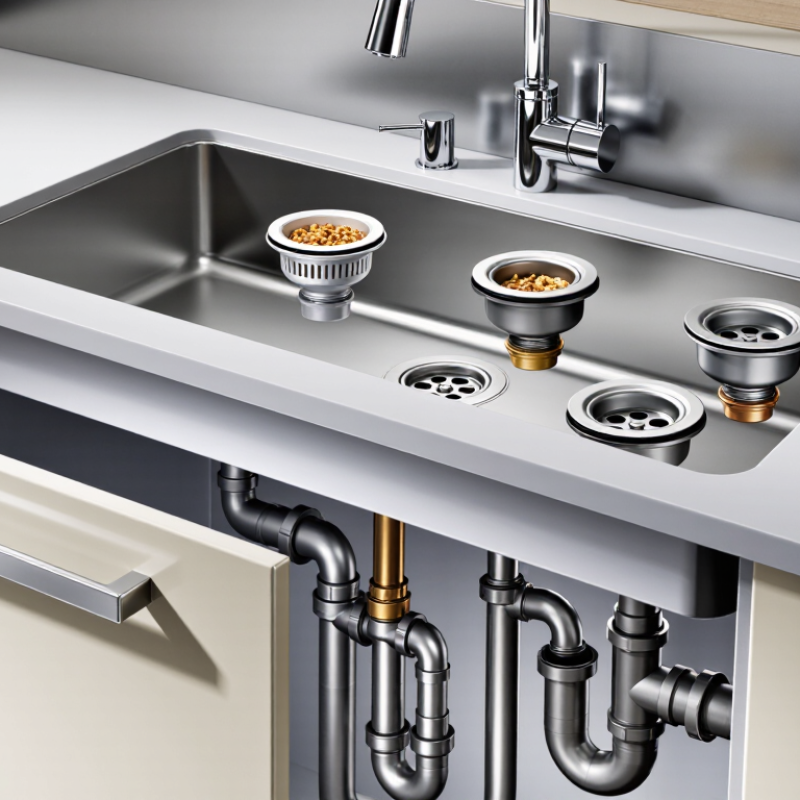
How to Choose the Right Sink Drain for Your Needs?

Identify Sink Type and Match the Common 1.25–1.5-Inch Drain Size

How to Choose the Right Sink Drain for Your Needs?

Choosing a sink drain starts with identifying the sink type. Bathroom sinks commonly use a 1.25-inch drain opening. Many kitchen and utility sinks use a 1.5-inch opening. These sizes are common, but they are not universal. Measure carefully.

I have seen a drain look correct until the flange sat loosely against the basin. That small gap caused slow leaks. Measure the opening at its narrowest point, then check the sink’s thickness below the rim. A ruler and a flashlight help. Do not rely only on an old drain’s appearance. Threads, washers, and tailpiece lengths can differ.

Vessel sinks may need a taller drain body and a wider upper flange. Undermount and drop-in sinks often need a drain that matches the basin’s overflow channel. A bathroom pop-up drain may also require a lift-rod connection.

Kitchen sinks usually need a simpler basket-style design, but cabinet space still matters. Check the drain outlet size before buying the trap. A 1.25-inch drain connected to an unsuitable 1.5-inch pipe may need an approved adapter. I once overlooked the overflow detail and had to replace the assembly. It was avoidable. When uncertain, compare the measured dimensions with the installation instructions and local plumbing requirements.

Choose Kitchen Drains with the Standard 3.5-Inch Basket-Strainer Opening

How to Choose the Right Sink Drain for Your Needs?

For most kitchen sinks, a drain with a standard 3.5-inch basket-strainer opening is the practical starting point. Measure the opening before ordering. Do not rely only on the sink’s advertised size. During sink replacements, I have seen small rim differences cause poor sealing and slow leaks. The drain flange should sit flat against the sink surface. A firm gasket matters just as much.

Check the basket depth, strainer holes, and connection size. A deep basket catches food scraps effectively without blocking water flow too quickly. Fine perforations help contain rice, vegetable peels, and other small debris. However, extremely fine holes may need frequent cleaning. That trade-off is easy to overlook. Keep the plumbing layout in mind, too. A drain that fits the opening may still interfere with the waste pipe below.

Material also deserves attention. Stainless steel usually resists staining and handles daily kitchen use well. Thicker metal can feel more stable during installation. Inspect the threaded connection before tightening. Hand-tighten first, then use a suitable wrench carefully. Over-tightening can distort the gasket. I once assumed more pressure meant a better seal, but that advice was too broad. A controlled, even fit is safer. Test the drain with a full basin of water, then check underneath with a dry paper towel. Small drips become obvious.

Compare Pop-Up, Grid, Flip-Tip, and Lift-and-Turn Drain Mechanisms

Choosing the right sink drain depends on daily habits, basin design, and cleaning expectations. In my installation experience, pop-up drains suit bathrooms where quick water control matters. Press the stopper to close it, then press again to release it. They look tidy, but their internal rod and linkage can collect hair and soap. Access beneath the basin may also feel awkward.

Grid drains keep water moving while blocking larger debris. They work well in utility or frequently used sinks, especially when overflow protection is not required. However, they do not seal the basin for soaking or filling. Flip-tip drains use a rotating stopper with a simple top mechanism. They are easy to operate and usually easier to clean. Their low profile is useful in compact basins. Still, the seal can weaken if the stopper or gasket is poorly aligned.

Tips: Measure the drain opening, tailpiece, and overflow configuration before buying. Check whether the sink needs an overflow-compatible drain. Match the drain finish to the faucet only after confirming the material and thread size. Hand-tighten plastic parts first, then use a tool carefully. Over-tightening can distort the gasket.

Lift-and-turn drains offer a straightforward design. Lift, rotate, and release the stopper to open or close the basin. Fewer moving parts can mean easier maintenance, though operation may require both hands. I once chose one for a guest sink and underestimated how often users wanted quick drainage. That choice worked, but not perfectly. Think beyond appearance. Your preferred mechanism should match cleaning routines, water control, and the people using the sink.

Check Material, Corrosion Resistance, and Compatibility with Plumbing Standards

Choosing the right sink drain starts with the material, not its appearance. I once replaced a drain that looked solid but developed rust around the flange within months. That experience changed how I evaluate fittings. Stainless steel usually offers strong corrosion resistance, especially in kitchens exposed to water, salt, and cleaning chemicals. Brass can also perform well, but its protective finish must remain intact. Cheap plated surfaces may peel, exposing weaker metal underneath.

Check the drain’s construction carefully. A thick flange feels more stable and resists bending during installation. Smooth internal walls help water and residue pass through with fewer obstructions.

However, “stainless steel” is not a complete quality description. Different grades react differently to moisture and chemicals. Ask for the material grade when the information is available. Small details matter.

Compatibility with plumbing standards is equally important. Measure the sink opening, drain outlet, and tailpiece before ordering. A drain with the wrong diameter may require awkward adapters or leak-prone connections. Confirm whether the fitting matches the local pipe system, thread type, gasket design, and waste configuration.

Local plumbing requirements can differ, so checking official guidance or asking a qualified plumber is sensible. I sometimes measure twice and still find an old sink is slightly irregular. That is why dry-fitting the parts before applying sealant remains a practical habit.

Verify Overflow Design, Trap Connection, and Required Drainage Capacity

How to Choose the Right Sink Drain for Your Needs?

A sink drain should match the basin’s overflow design. A basin with an overflow opening needs a drain that accepts overflow water. A non-overflow basin requires a sealed, non-overflow drain assembly. Check the opening beneath the rim. Some overflow channels are narrow and easy to miss. I once assumed every bathroom drain handled overflow water. That assumption was wrong. Pour water slowly into the basin and watch whether it enters the drain correctly. Check for leaks around the flange and gasket.

Trap connection details matter just as much. Measure the drain outlet, tailpiece, and wall connection before purchasing. Common sizes may appear similar, but thread depth can differ. Confirm that the drain tailpiece reaches the trap without forcing an angle. A stressed connection may drip later. Dry-fit the parts first. It saves time. Follow the installation instructions and local plumbing requirements. When the wall connection is uncertain, ask a qualified plumber to inspect it.

Required drainage capacity depends on the faucet’s flow and the basin’s use. A shallow drain opening may struggle with a strong stream, especially when a stopper or hair is present. Compare the drain’s stated flow capacity with the faucet’s maximum output. Test the assembled sink with a full bowl of water. Watch the water level while removing the stopper. It should fall steadily, without gurgling or backing up. Real conditions are messier than specifications, so leave a small safety margin.

How to Choose the Right Sink Drain for Your Needs? - Verify Overflow Design, Trap Connection, and Required Drainage Capacity

Sink Application Overflow Design to Verify Typical Drain Opening Typical Drain Outlet / Trap Connection Expected Fixture Flow Drain Selection Guidance
Bathroom lavatory with overflow Use a slotted or overflow-compatible drain so water can enter the basin’s overflow channel. Approximately 1.75 in (44–45 mm) basin opening; confirm the manufacturer’s cutout. Usually a 1.25 in (32 mm) tubular tailpiece and P-trap connection. Common faucet flow: up to 1.5 gal/min (5.7 L/min) in many residential applications. Choose a standard lavatory pop-up or grid drain with an overflow port. A solid, non-overflow drain may restrict the built-in overflow path.
Bathroom vessel sink without overflow No overflow channel is present; select a non-overflow drain with a solid flange or drain body. Commonly 1.75 in (44–45 mm), but vessel sink openings vary significantly. Usually a 1.25 in (32 mm) tubular tailpiece and P-trap connection. Typically sized for a faucet flow of approximately 1.2–1.5 gal/min (4.5–5.7 L/min). Do not install an overflow-style drain unless the basin includes a compatible overflow passage. Verify drain height and countertop clearance.
Kitchen sink with one or two bowls Most kitchen sinks do not use a lavatory-style overflow. Check whether the sink has an integral overflow or accessory opening. Standard basket-strainer opening: approximately 3.5 in (89 mm). Typically a 1.5 in (38 mm) tubular drain connection; double bowls use a continuous or branch waste configuration. A typical kitchen faucet may deliver about 1.8–2.2 gal/min (6.8–8.3 L/min), depending on the fitting. Use a 3.5 in basket strainer or compatible disposer flange. Confirm that the waste tee, baffle, and trap arrangement match the number of bowls.
Utility or laundry sink Overflow availability varies. If the basin has an overflow passage, use an overflow-compatible drain; otherwise use a non-overflow drain. Common sizes include approximately 1.75 in (44–45 mm) or 3.5 in (89 mm); measure the actual opening. Often 1.5 in (38 mm) tubular waste, although larger commercial-style configurations may require different piping. Typical supply flow may range from 2.0–2.5 gal/min (7.6–9.5 L/min), depending on the faucet and installation. Prioritize a large, unobstructed strainer and a correctly sized P-trap. Verify that the existing waste pipe can handle simultaneous discharge.
Bar or prep sink Usually no overflow; use a non-overflow drain unless the sink specifically includes an overflow channel. Commonly approximately 3.5 in (89 mm) for a basket strainer, but compact models may use smaller openings. Usually a 1.5 in (38 mm) drain connection and P-trap. Often approximately 1.5–2.2 gal/min (5.7–8.3 L/min), based on faucet design. Select a compact basket strainer or grid drain that matches the opening, cabinet clearance, and trap alignment.
Commercial or high-use handwashing sink Follow the basin specification; some units have integral overflow protection while others are designed without an overflow. Often 1.75 in (44–45 mm) for lavatory-style basins, but commercial fixtures may use proprietary dimensions. Commonly 1.5 in (38 mm), subject to local plumbing code and the fixture specification. Faucet flow is commonly regulated between approximately 0.5 and 1.5 gal/min (1.9–5.7 L/min), depending on the application. Use a commercial-grade drain with the specified overflow configuration, corrosion-resistant materials, and a trap connection approved for the installation.
Selection Check: Drainage capacity is affected by the drain opening, tailpiece, trap, waste pipe diameter, pipe slope, fittings, and blockages. The flow values above represent typical fixture discharge ranges rather than guaranteed drain capacities. Always measure the basin opening and confirm local plumbing-code requirements before installation.

FAQS

What drain size is common for bathroom sinks?

Many bathroom sinks use a 1.25-inch drain opening. Measure the opening instead of trusting appearance.

What drain size do kitchen and utility sinks usually need?

Many use a 1.5-inch opening. Sizes vary, so check the actual sink and drain outlet.

How should I measure a sink drain opening?

Measure the narrowest opening point. Check the basin thickness below the rim with a ruler and flashlight.

Which drains suit vessel sinks?

Vessel sinks may need a taller drain body and a wider upper flange. Cabinet clearance still matters.

What drain features do overflow sinks require?

The drain should match the basin’s overflow channel. A bathroom pop-up drain may also need a lift-rod connection.

Which materials resist corrosion well?

Stainless steel usually resists moisture, salt, and cleaning chemicals well. Brass can work too, if its protective finish remains intact.

Does “stainless steel” guarantee good drain quality?

No. Different grades react differently to moisture and chemicals. Ask for the material grade when possible.

What should I check before connecting the drain to plumbing?

Confirm the diameter, thread type, gasket design, tailpiece, and pipe system. Local requirements may also apply.

Should I test the parts before using sealant?

Yes. Dry-fit the drain, washers, and tailpiece first. This can reveal loose flanges or mismatched threads.

What common mistake can cause leaks?

An old drain may look suitable but fit poorly. I once missed an overflow detail and replaced the assembly unnecessarily.

Conclusion

Choosing the right Sink Drain begins with identifying your sink type and confirming the correct drain size. Most bathroom and utility sinks use a common 1.25- to 1.5-inch opening, while kitchen sinks typically require a standard 3.5-inch basket-strainer opening. Accurate measurements help ensure a secure fit and prevent leaks or installation problems.

You should also compare drain mechanisms, such as pop-up, grid, flip-tip, and lift-and-turn designs, based on convenience and cleaning needs. Pay attention to construction materials, corrosion resistance, and compatibility with standard plumbing connections. Before purchasing, verify whether the sink has an overflow opening, select a drain with a matching overflow design, and confirm that the trap connection is suitable. Finally, consider the required drainage capacity so water can flow efficiently without frequent blockages or slow drainage.

Ethan

Ethan

Ethan is a seasoned marketing professional with a deep expertise in our company's innovative product line. With a passion for sharing knowledge and insights, he takes the lead in regularly updating our corporate blog, where he explores industry trends, product features, and effective marketing......