
Jutye Sanitary Jutye Sanitary

China Best Industrial Floor Drain Manufacturer?

Time:2026-11-21 Author:Mason
0%

Choosing China’s best Industrial Floor Drain manufacturer is not simply a price comparison. Industrial drains must handle washdown water, debris, cleaning chemicals, and repeated loads without creating standing water or maintenance headaches. Small details matter. Grate openings, outlet size, body depth, and slope can affect how reliably a drain works on a real production floor.

Water management gives this choice broader significance. The United Nations World Water Development Report 2024 estimates that industry accounts for roughly one-fifth of global freshwater withdrawals. That figure does not measure floor-drain demand, but it underscores why factories need practical systems for collecting and directing process water. A well-specified drain supports cleaner, more manageable operations; it cannot, by itself, solve poor floor design or inadequate maintenance.

This guide compares manufacturers through evidence buyers can check: material specifications, dimensional drawings, production capability, quality-control records, and test results for flow and load performance. For projects requiring standards-based documentation, confirm the applicable market requirements and ask how products align with relevant standards, such as EN 1253 where appropriate. Request samples or inspection records when the project warrants them. A polished catalogue is not proof. And supplier claims still deserve scrutiny. The best choice depends on the facility’s wastewater, traffic, cleaning routine, and installation details—not on a “best manufacturer” label alone.
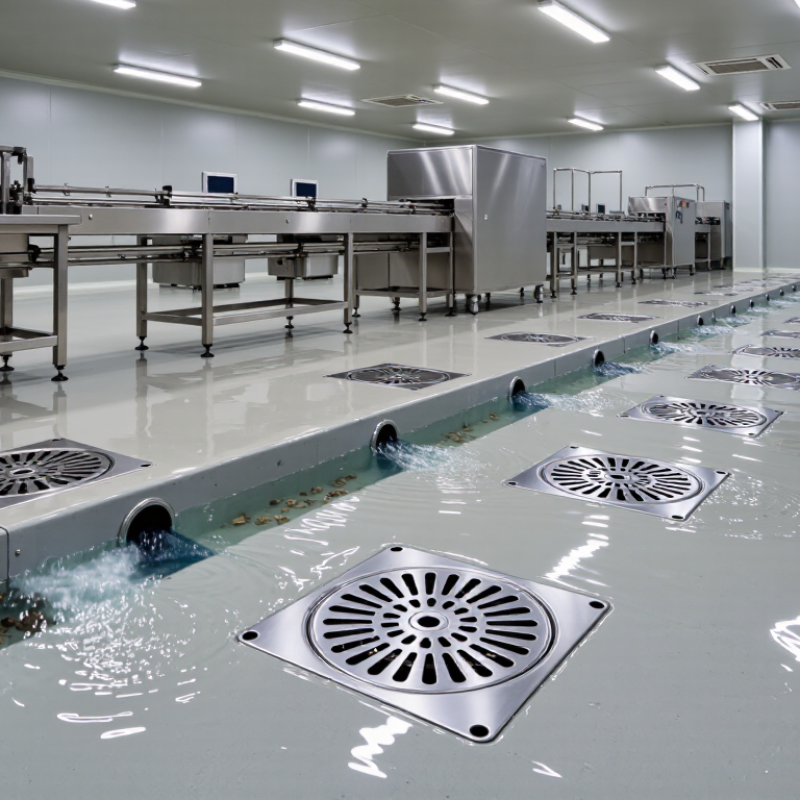
China Best Industrial Floor Drain Manufacturer?

Industrial Floor Drains: Main Types and the Scope of EN 1253

Industrial floors need drainage matched to washdown volume, debris, and traffic loads. Common layouts include point gullies, linear channels, trapped floor drains, and roof outlets. EN 1253 is most relevant to drainage products used in buildings: its parts address trapped and untrapped floor gullies, roof drains, and related components. It is not a complete specification for every industrial drainage system.

A useful measurable detail comes from EN 1253-1:2015: covered trapped floor gullies require a water-seal depth of at least 50 mm. That seal helps limit sewer gases entering occupied spaces, but it can also dry out where drains see little use. Real sites are messier. Check grate load rating, outlet size, flow capacity, cleanout access, and resistance to the actual cleaning chemicals. EN 1253 conformity provides a performance reference; it does not by itself confirm suitability for a particular production line or washdown routine. A drain that passes a standard test may still be awkward to clean beside a machine.

Industrial Floor Drains: Main Types and the Scope of EN 1253

What the chart shows: EN 1253-1 specifies a minimum water-seal depth of 50 mm for the trapped floor gullies it covers. This requirement should not be assumed to apply to every drain type.

Series scope: EN 1253-1 covers trapped floor gullies with a water seal of at least 50 mm; EN 1253-2 covers roof drains and floor gullies without a trap; EN 1253-3 covers evaluation of conformity; EN 1253-4 covers access covers; and EN 1253-5 covers gullies with light liquids closure.

304 vs. 316 Stainless Steel: 18/8 Composition and 2–3% Molybdenum

For an industrial floor drain, stainless steel grade matters most where water, cleaning chemicals, and salts meet. Type 304 is often described as 18/8: roughly 18% chromium and 8% nickel. Chromium helps form a protective surface layer, while nickel supports toughness and formability. This makes 304 a practical choice for many indoor production areas. But “stainless” does not mean stain-proof. Chloride-rich washdown water can still leave pits, especially in crevices around a grate or poorly drained channel.

Type 316 keeps a similar chromium-nickel base and typically adds 2–3% molybdenum. That addition improves resistance to chloride corrosion, making 316 worth considering for coastal sites, food-processing washdown zones, or facilities using salty solutions. The upgrade is not magic. Surface finish, weld quality, drainage, and routine cleaning still matter. Look closely at the drain’s cut edges and welds; trapped residue can defeat a better alloy. A material certificate helps verify the grade, but it cannot replace sensible installation checks. In practice, 304 may be enough for a dry, mild environment. Choosing 316 everywhere can be costly, and sometimes unnecessary. The honest choice depends on the actual liquid, cleaning routine, and how long moisture sits on the steel.

Drainage Capacity: Compare Flow Rates Using EN 1253 Test Data

China Best Industrial Floor Drain Manufacturer?

Drainage Capacity: Compare Flow Rates Using EN 1253 Test Data

A high flow-rate figure can look reassuring, but it means little without test conditions. Request the applicable EN 1253 report and check the measured capacity in litres per second. Compare products tested at the same water depth and with equivalent outlet sizes, traps, and grate configurations. Small setup differences can change the result.

Numbers need context. A drain tested with a shallow water layer may not perform like one handling a sudden washdown. Check whether the report identifies the test method, specimen configuration, and any relevant standard edition. Ask for the full report, not only a catalogue figure. If the supplier cannot explain how the result was obtained, pause and verify it independently.

Then match the tested capacity to the site. Estimate inflow from hoses, equipment, and floor slope, and consider whether debris could partly block the grate. A larger outlet is not automatically better; the connected pipework may become the bottleneck. That matters. Flow rate also says nothing by itself about load resistance, corrosion performance, or ease of cleaning. I would compare those separately, even when time is tight. A careful comparison may feel slower, but it can prevent standing water during peak operation.

Cover Load Ratings: Understand EN 124 Classes A15–F900

China Best Industrial Floor Drain Manufacturer?

Cover Load Ratings: Understand EN 124 Classes A15–F900

A drain cover’s class should match the loads and location it will face. EN 124:2015 assigns test loads from A15 at 15 kN to F900 at 900 kN. These are standardized test loads, not vehicle weight limits. The standard series places covers into six classes, with selection based on installation area and expected use. A15 suits pedestrian or cycle areas; B125 is commonly specified for footways and comparable spaces. C250 applies to kerbside channels, while D400 covers carriageways. E600 and F900 address areas exposed to especially heavy wheel loads, such as industrial sites and aircraft pavements.

Those figures come from the EN 124 standard, not a prediction of how a cover will perform in every installation. A delivery truck turning over a drain can create different stresses from steady traffic. Check the class, opening size, support frame, and installation details together. A solid-looking grate is not enough. I would not treat the rating alone as a complete design answer; that shortcut is easy to make, and sometimes costly. The appropriate class depends on site conditions, so confirm the specification with the project engineer and the relevant part of EN 124. Even a small mismatch between frame and cover can matter.

Assessing Chinese Manufacturers: Certifications, Testing, and Traceability

China Best Industrial Floor Drain Manufacturer?

Assessing Chinese Manufacturers: Certifications, Testing, and Traceability

When evaluating a Chinese industrial floor drain manufacturer, treat certificates as a starting point, not proof of product performance. The ISO Survey 2022 reported more than 1.2 million ISO 9001 certificates worldwide. This shows how widespread quality-management certification is; it does not certify a particular drain model. That distinction matters.

Ask for test reports tied to the exact model and material you plan to buy. Depending on the destination market, EN 1253 may be a relevant reference for floor gullies. Request measured flow capacity, water-seal depth, load performance, and corrosion-test results. Check the sample description, test date, and laboratory details. A neat certificate alone tells you little.

Traceability should connect the finished drain to its material batch and inspection record. Ask whether a stamped batch code can be matched to mill certificates and production checks. I would still question reports that omit test conditions; paperwork can look convincing while leaving gaps. A brief factory audit can reveal whether records follow the product from incoming steel to final packaging.

China Best Industrial Floor Drain Manufacturer? - Assessing Chinese Manufacturers: Certifications, Testing, and Traceability
Assessment Dimension What to Verify Example Evidence Evaluation Guidance
Quality management Whether the production site has a current quality-management certificate covering the relevant manufacturing scope. ISO 9001:2015 certificate; issuing body and accreditation checked; site address and scope match the factory. Confirm certificate validity directly with the issuer or accreditation-body database. A certificate alone does not prove product performance.
Environmental management Whether environmental controls are managed at the manufacturing site. ISO 14001:2015 certificate with a verified site, scope, issuing body, and validity period. Treat this as evidence of a management system, not proof that a specific drain meets a performance or material requirement.
Applicable product standard Whether the offered floor gully or drain configuration is assessed against the requirements relevant to its intended use and destination market. Test report referencing EN 1253 for applicable floor gullies, with product type, test method, specimen details, and results identified. Check that the standard edition and product scope are appropriate. Do not assume every floor drain is covered by the same requirements.
Hydraulic performance Flow capacity and drainage performance for the specified outlet, grate, and installation arrangement. Laboratory report stating test setup, outlet size, water head or test conditions, measured flow rate, and acceptance criteria. Compare results only when test conditions and product configurations are comparable; request results for the quoted model.
Water seal and odor control Water-seal depth and, where applicable, resistance to seal loss under the relevant test conditions. Dimensioned product drawing plus test results identifying the tested trap or seal configuration. Confirm that the supplied assembly matches the tested design and meets project-specific plumbing requirements.
Material verification Stainless-steel grade and consistency between the product, purchase specification, and material documents. Mill test certificate linked to the material batch; portable X-ray fluorescence (XRF) screening where appropriate. XRF can help screen alloy composition but does not reliably determine carbon content. Use suitable laboratory methods if distinguishing grades that depend on carbon content.
Dimensional and workmanship inspection Drain dimensions, outlet connection, grate fit, surface finish, weld quality, and sharp-edge control. Approved drawings, recorded inspection results, calibrated measuring tools, and retained inspection samples. Define measurable tolerances and acceptance criteria before production rather than relying on visual descriptions alone.
Corrosion-related testing Whether corrosion testing is appropriate for the specified material, finish, environment, and project requirements. Test report naming the method, exposure conditions, duration, specimen material and finish, and observed results. A test result applies to the tested specimen and conditions; it does not guarantee performance in every installation environment.
Production traceability Whether finished products can be connected to production records and incoming material batches. Lot or batch code linked to production date, material batch, inspection record, and shipment documents. Request a sample traceability exercise: select one finished unit and ask the supplier to retrieve its supporting records.
Test-report credibility Whether reports identify the tested product and are issued by a competent, independent laboratory where required. Complete report with laboratory details, report number, date, sample identification, methods, results, and authorized sign-off. Verify report authenticity with the laboratory and check that the tested sample matches the current product specification.
Change control Whether changes to materials, tooling, dimensions, components, or production location are documented and communicated. Documented change-control procedure; revision history; approval records for changes affecting form, fit, or performance. Require notice and, when relevant, reinspection or retesting before a changed product is supplied.
How to use this table This is an assessment checklist, not a ranking of actual manufacturers. Verify certificates, reports, and traceability records independently and assess the exact product configuration being purchased.

FAQS

What is the main difference between 304 and 316 stainless steel?

Type 304 typically contains about 18% chromium and 8% nickel. Type 316 adds roughly 2–3% molybdenum, improving resistance to chloride corrosion.

Is 304 stainless steel suitable for indoor floor drains?

It can suit dry, mild indoor areas. Chloride-rich wash water may still cause pits, especially around grates and poorly drained channels.

When should I consider 316 stainless steel?

Consider it for coastal sites, salty solutions, or frequent washdown areas. It costs more, so the site conditions should justify the upgrade.

Does 316 prevent all corrosion?

No. Trapped residue, poor welds, rough cut edges, and lingering moisture can still cause problems. Better alloy is not a cure-all.

What should I check in a drainage flow-rate report?

Request the full EN 1253 test report. Check the measured litres per second, water depth, outlet size, trap, grate, and test configuration.

Can I compare flow rates from different test setups?

Compare results only when test conditions are similar. Small differences in water depth or grate setup can change the measured capacity.

Does a larger drain outlet always improve drainage?

Not always. Connected pipework may become the bottleneck, and debris can partly block the grate. Check the whole drainage path.

What else should I consider besides flow rate?

Check load resistance, corrosion performance, and ease of cleaning separately. I might focus too much on the headline figure; that would be a mistake.

How can I confirm the steel grade?

Ask for a material certificate, then inspect the drain’s edges and welds. The certificate helps, but installation checks still matter.

Conclusion

This article explains how to evaluate an Industrial Floor Drain by matching its design to the site’s drainage needs. It outlines common drain types and the general scope of EN 1253, then compares 304 and 316 stainless steel. Both are commonly described as 18/8 stainless steel, while 316 also contains roughly 2–3% molybdenum, which can improve resistance to certain corrosive environments.

The guide also shows why drainage capacity should be assessed using comparable flow-rate test data, including results obtained under EN 1253 methods. It clarifies EN 124 cover load classes, from A15 to F900, so buyers can consider the expected loading conditions. Finally, it offers practical ways to assess manufacturers in China, such as reviewing relevant certifications, test reports, production controls, and material traceability rather than relying on claims alone.

Mason

Mason

Mason is a seasoned marketing professional with a deep expertise in the company's offerings and a passion for driving brand awareness. With a strong background in digital marketing strategies, he has an innate ability to connect with diverse audiences and effectively communicate product benefits.......